
Mold Under Vinyl Flooring - What You Should Know
There is always some mold around. Mold spores occur naturally in indoor and outdoor environments. They can enter a home through open windows, doors, HVAC systems, clothing, shoes, bags, and even pets.
Moisture problems inside a home can create conditions that allow mold to grow. Plumbing leaks, water intrusion, and damp building materials are common causes. Dust and organic debris trapped beneath flooring can also contribute to mold growth.
Looking to get Mold Inspection in Northern Califronia/Bay Area? Select your county from the list here or call us today at (415) 429-6330 to speak with a California-based environmental consultant.
Can Mold Really Grow Under Vinyl Flooring?
Vinyl flooring is a popular choice, but if mold grows under vinyl plank flooring, it often means moisture has become trapped beneath the surface. Vinyl flooring is waterproof on the surface and does not allow much airflow. As a result, moisture beneath the flooring may have difficulty drying.
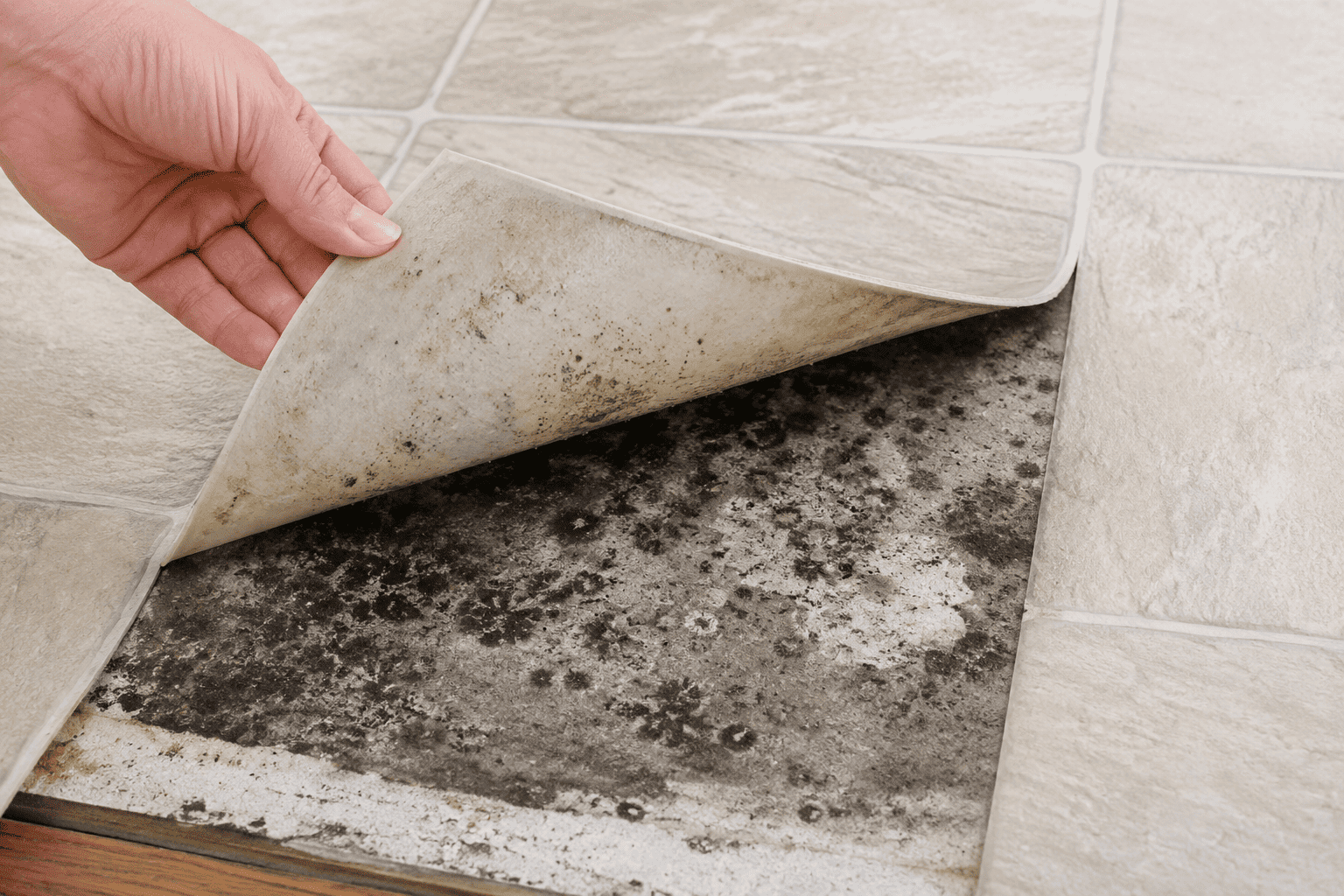
Common causes of mold under vinyl flooring include:
Damp or unsealed concrete subfloors
Missing or damaged moisture barriers
Plumbing leaks or water intrusion
Dust, paper, or other organic debris beneath the flooring
Signs of Mold
In some cases, you may notice signs of mold without removing the flooring. One of the first signs is discoloration. Flooring may develop gray, black, or yellowish staining.
Another common sign is a musty odor. Persistent odors can indicate moisture or microbial growth beneath the flooring.
You may also notice planks buckling, warping, or lifting at the edges. These conditions can suggest moisture-related issues below the surface.
How to Fix Mold
If you suspect mold beneath your flooring, cleaning the visible surface alone is usually not enough. The affected flooring may need to be removed so the subfloor can be inspected.
The source of moisture should be identified and corrected before any remediation work begins. Depending on the extent of contamination, professional mold remediation may be necessary.
Affected materials should be cleaned or removed in accordance with industry standards. Physical removal of mold growth and the use of appropriate EPA-registered antimicrobial products may be required when necessary.
After remediation, the area should be dried thoroughly. Use fans and dehumidifiers to help reduce moisture levels and allow the subfloor to dry completely before reinstalling flooring materials.
How to Protect Vinyl Flooring from Mold in the Future
To help prevent mold growth beneath vinyl flooring, follow a few basic precautions. Before installing vinyl flooring, use an appropriate vapor barrier, especially over concrete subfloors.

Make it stand out
Address spills, leaks, and water intrusion promptly. Removing excess moisture as quickly as possible is an important part of mold prevention.
Regularly inspect areas prone to moisture problems and ensure proper humidity control throughout the home.
Conclusion
While vinyl flooring is waterproof on the surface, moisture can still become trapped beneath it and create conditions that support mold growth. Proper installation, moisture control, and prompt attention to water problems are essential.
If mold develops beneath the flooring, the source of moisture must be addressed and the affected area properly remediated before new flooring is installed. Understanding these risks can help protect both your flooring and indoor environment.
Common FAQs about Mold Under Vinyl Flooring
1. Can mold grow under vinyl flooring?
Yes, mold can grow under vinyl flooring when moisture becomes trapped beneath the planks. Common causes include water leaks, damp concrete subfloors, poor installation, and the absence of a moisture barrier.
2. What causes mold under vinyl plank flooring?
The most common causes of mold under vinyl plank flooring are plumbing leaks, excessive humidity, wet subfloors, flooding, and trapped moisture. Dust, dirt, and organic debris beneath the flooring can also encourage mold growth.
3. How can I tell if there is mold under my vinyl flooring?
Signs of mold under vinyl flooring include musty odors, black, gray, or yellow stains, discoloration, buckling planks, warped flooring, and unexplained indoor air quality issues.
4. How do you remove mold from under vinyl flooring?
To remove mold, the affected vinyl planks should be lifted so the subfloor can be inspected and cleaned. After fixing the source of moisture, the area should be remediated using appropriate cleaning methods and, when necessary, EPA-registered antimicrobial products. The area should then be dried completely before reinstalling flooring.
5. Does waterproof vinyl flooring prevent mold?
While vinyl flooring is waterproof on the surface, it does not prevent mold growth underneath. If water becomes trapped beneath the flooring and cannot evaporate, mold can still develop on the subfloor.
Still Got any questions? Call AEC now to get guidance through tough environmental challenges, including water & mold damage.
For a FREE consultation or to make an appointment:
