
There are many attractive characteristics about Northern Colorado, such as beautiful scenery, active living, and developing communities. Boulder, Fort Collins, and Denver are cities that provide a high standard of living, yet the climate of this area also makes it prone to various problems regarding indoor air quality. With people spending a lot of time indoors, good IAQ is very important to your family’s well-being.
[To get Indoor Air Quality Testing in the Northern Colorado area, select your county from the list here or call us today at (303) 217-6743 to speak with a Northern Colorado-based environmental consultant.]

Common Indoor Air Quality Challenges
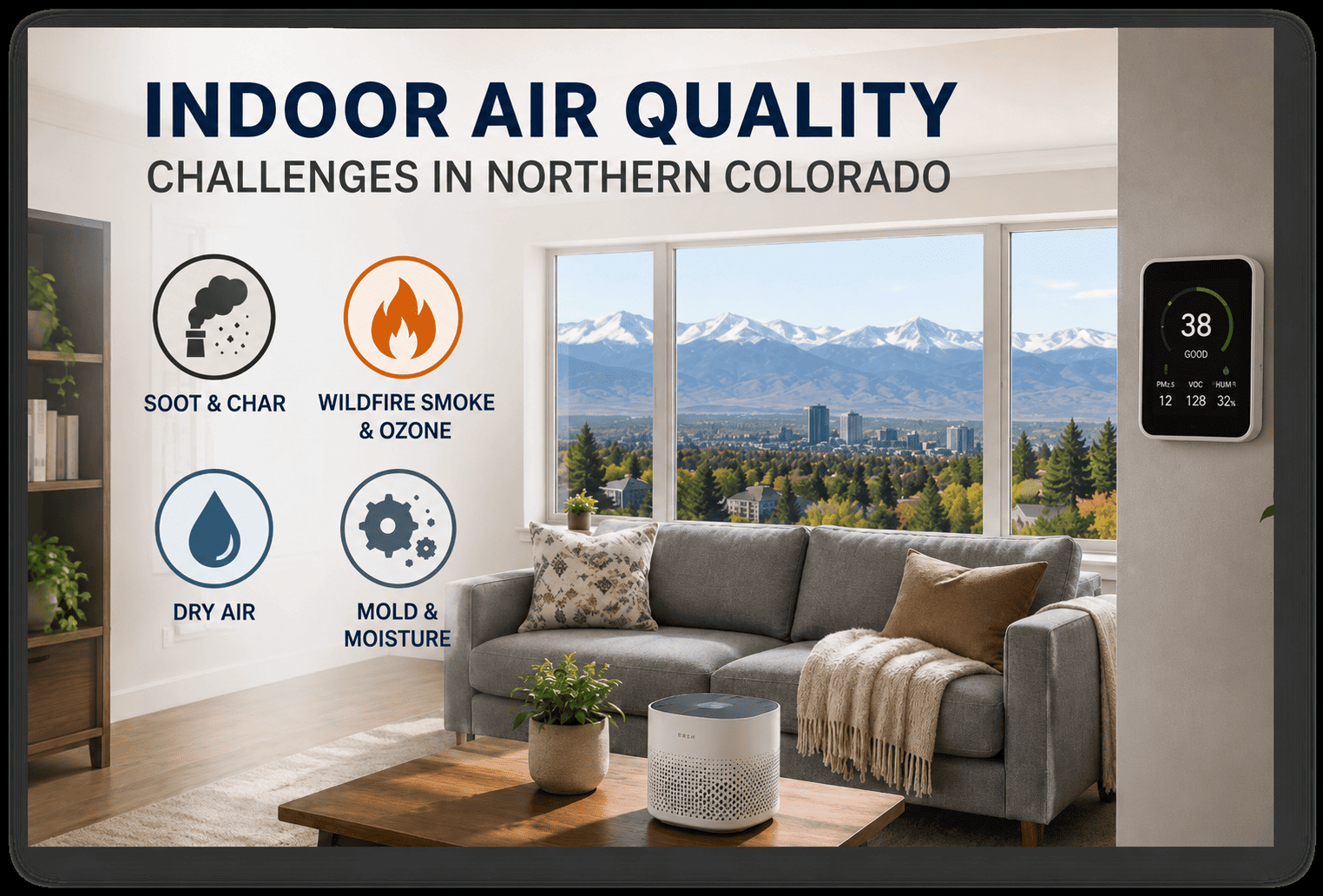
Fire Smoke, Soot, Char, and Ozone
When wildfire season comes around, indoor air quality in Boulder, Fort Collins, and Denver can be significantly affected. Fire smoke, soot particles, char residue, and ground-level ozone can enter your home through windows, doors, vents, and other small openings. After a nearby fire, professional soot and char testing can help determine the extent of contamination inside your property.
Dry Air and Mold
The dry air in Colorado is bound to cause dry skin and sinus issues in many homes. However, moisture problems caused by plumbing leaks, roof leaks, or flooding can create conditions for mold growth. Mold may develop inside walls, crawl spaces, basements, and other hidden areas if moisture is not addressed.
How to Monitor and Protect Your Indoor Air Quality
Indoor air quality improvements can begin with testing and inspections by professionals.
· Mold Testing: When you notice musty odors, visible mold growth, or signs of water damage, it is best to schedule a professional mold inspection.
· Air Monitoring Specialist: Professional air monitoring can help identify airborne contaminants, evaluate indoor air quality, and provide data to support remediation or environmental assessments.
· Fire Smoke, Soot, and Char Testing: If your property has been affected by wildfire smoke, professional testing can assess smoke-related contaminants, soot, and char residue within the indoor environment.
· Work with Local IAQ Specialists: Local experts understand Northern Colorado’s environmental conditions and can recommend effective solutions for your home or business. Learn more about professional indoor air quality services in Northern Colorado here.
Conclusion
Good indoor air quality is essential for maintaining a healthy home in Northern Colorado. Whether you are concerned about wildfire smoke, soot, char residue, dry indoor air, mold, or other airborne contaminants, working with experienced professionals can help identify issues and recommend the right solutions. Taking action today can help protect your indoor environment for years to come.
Frequently Asked Questions (FAQs)
Does smoke from wildfires affect my indoor air quality?
Yes. Smoke, soot particles, and other airborne contaminants can enter your home through vents, doors, windows, and other openings, especially if the home is not properly sealed or filtered.
When should I perform mold testing?
You should schedule mold testing if you notice visible mold growth, musty odors, recent water damage, or suspect hidden moisture problems.
What does an air monitoring specialist do?
An air monitoring specialist evaluates indoor air quality by testing for airborne contaminants and environmental conditions that may affect the health and safety of your home or workplace.
